When families begin exploring educational options for their children, they often encounter a variety of teaching philosophies and developmental models. One approach that stands out for its individualized, relationship-based framework is DIR®.
DIR stands for Development, Individual Differences, and Relationships. At its core, the DIR model recognizes that every child develops at their own pace, has unique strengths and challenges, and learns best through meaningful, trusting relationships. Rather than applying a one-size-fits-all approach, DIR schools meet students where they are and create pathways for growth that honor each child’s individual journey.
Development: Meeting Children Where They Are
A foundational principle of DIR is understanding a child’s current developmental abilities and building from there. Educators use assessment tools and ongoing observation to identify each student’s developmental strengths and areas for growth. From there, a personalized plan is created to support foundational skills while providing appropriate challenges that encourage continued progress.
For example, a child may be able to communicate basic needs through gestures but struggle to engage in sustained interactions with peers or adults. In a DIR classroom, the focus may first be on strengthening the child’s sense of connection, engagement, and emotional safety. Once those foundations are established, educators can create supportive opportunities to expand communication and social interaction skills.
Rather than rushing development, DIR educators carefully scaffold learning experiences, helping students move up the developmental ladder at a pace that feels both achievable and supportive.
Individual Differences: Honoring Each Child’s Unique Profile
Every person experiences the world differently. In the DIR model, these differences are not viewed as obstacles to overcome, but as important factors to understand and support.
Educators consider how a child’s sensory processing, motor skills, communication style, emotional regulation, learning preferences, and other unique qualities impact their ability to engage and grow. By understanding these individual differences, schools can create environments that maximize strengths and provide targeted supports where needed.
In practice, this often means designing flexible classrooms that accommodate a variety of learning needs. Some students may focus better while bouncing on an exercise ball during circle time. Others may benefit from access to a swing, a loft space, visual supports posted throughout the classroom, or alternative communication methods such as Augmentative and Alternative Communication devices.
The goal is not to make every child fit the environment. It is to create environments that help every child reach their fullest potential.
Relationships: The Heart of the DIR Approach
What truly distinguishes DIR from many other developmental models is its emphasis on relationships.
DIR is built on the belief that meaningful learning and development occur within the context of safe, trusting, and authentic relationships. Before academic growth can flourish, children must feel connected, understood, and emotionally secure.
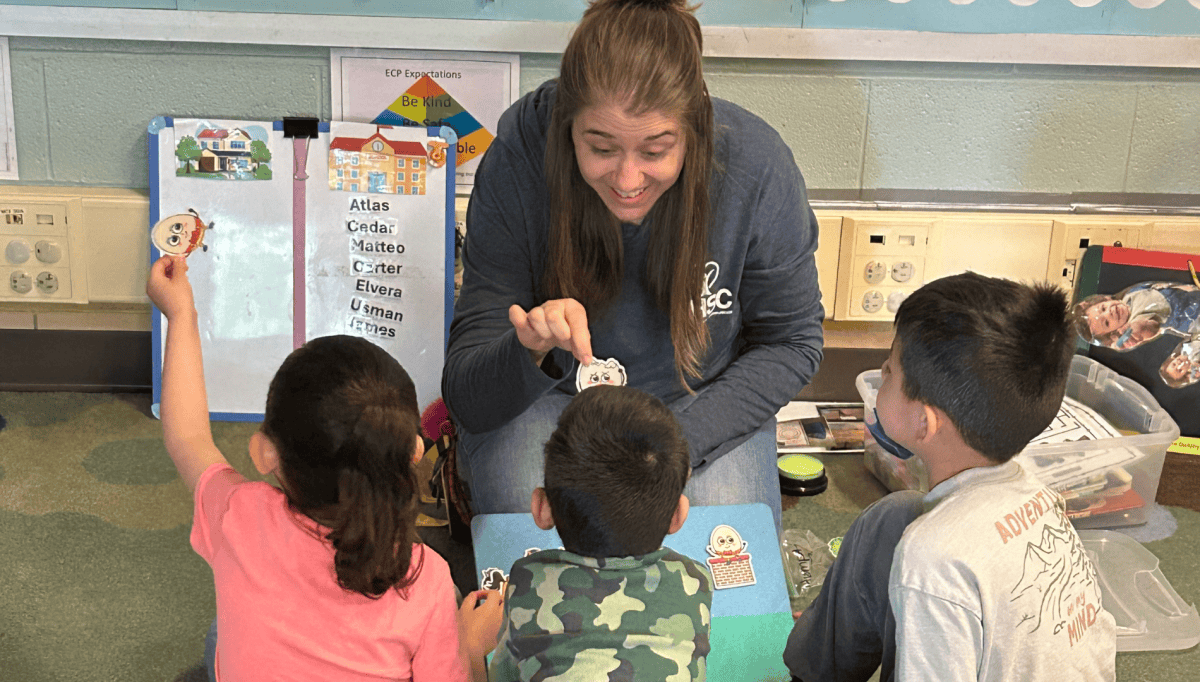
In a DIR school, educators lead with empathy. They prioritize connection before correction and seek to understand the underlying reasons behind a child’s behavior. Time spent building relationships is not separate from learning. It is an essential part of the learning process itself.
Relationship-building begins from the first day of school and remains a priority throughout the year. Strong connections between students, teachers, and families create the foundation for resilience, confidence, and lifelong learning.
Making Learning Meaningful
Another hallmark of the DIR approach is the use of children’s intrinsic interests and motivations to drive engagement.
When learning is connected to what a child genuinely enjoys, participation becomes more natural and meaningful. For example, a child who has little interest in traditional painting activities but loves cars might be invited to drive toy cars through paint to create artwork while exploring colors, textures, and creativity. By following the child’s interests, educators can transform everyday activities into powerful opportunities for growth and learning.
A Whole-Child Approach
DIR schools recognize that development is much more than academic achievement. By focusing on developmental readiness, honoring individual differences, and prioritizing meaningful relationships, the DIR model supports the growth of the whole child.
The result is a learning environment where children feel safe, valued, and empowered to develop the skills they need, not only for success in school, but for success in life.
DIR in Action at Buffalo Hearing & Speech Center
At Buffalo Hearing & Speech Center, we are committed to bringing the DIR model to life in our classrooms every day. Our approach is supported by an interdisciplinary team of skilled therapists and educators who collaborate closely to support the growth and development of each individual child. By working together, we are able to create comprehensive, individualized plans that address each student’s unique developmental profile while fostering meaningful relationships and engagement.
In our preschool classrooms, we focus on building the foundational social-emotional capacities that children need to thrive in school and beyond. Through play, connection, and individualized support, we help children develop skills such as engagement, communication, emotional regulation, and social problem-solving—the building blocks for lifelong learning.
As students transition into our school-age program, we continue to support their developmental journey. Our curriculum and therapeutic support are designed to help children grow into symbolic and logical thinkers while navigating increasingly complex social, emotional, and academic challenges. Within a nurturing and supportive environment, students are encouraged to build independence, strengthen relationships, and develop the confidence needed to reach their full potential.
Lauren Mallow, MA, CCC/SLP
DIRFloortime Coordinator and Expert Training Leader